Ocean Conditions and the Future of Wild Steelhead
Recent news coverage has brought renewed attention to the North Pacific’s changing ocean conditions and their implications for steelhead and salmon. NOAA scientists have been tracking how environmental shifts in the North Pacific are affecting survival rates for these iconic fish, and the picture isn’t encouraging.
For juvenile steelhead, winter and early spring ocean conditions can make or break an entire year class. As these young fish enter the ocean for the first time, they encounter a gauntlet of environmental factors, all tied to a single, increasingly dominant feature:
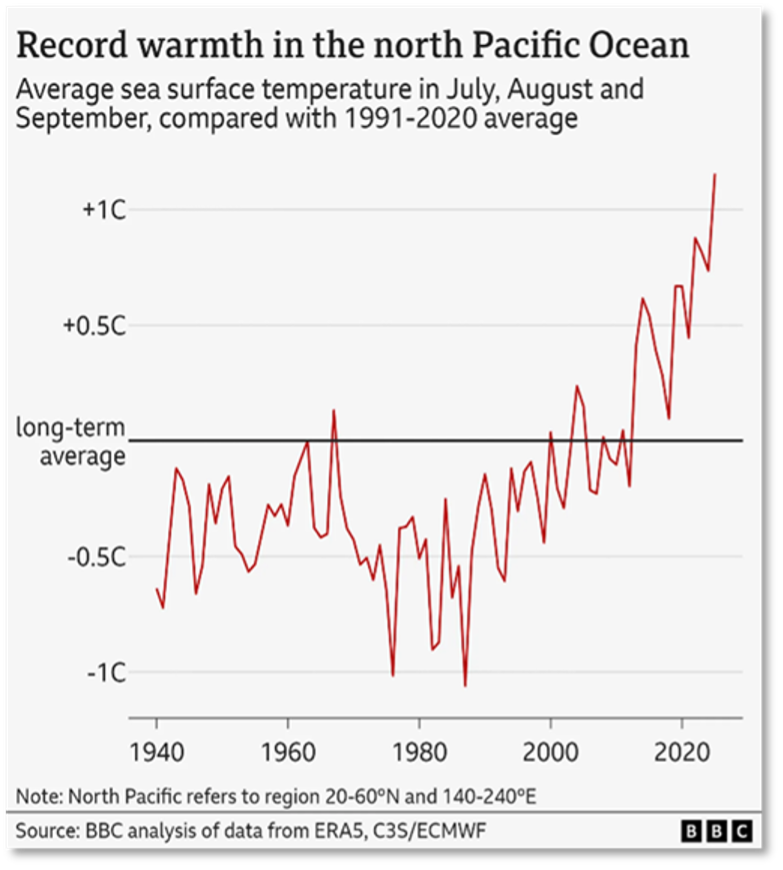
The North Pacific is warming at an alarming rate. Ocean heat content continues to climb, sea surface temperatures have hit record highs, and marine heat waves, those prolonged periods of dangerously elevated ocean temperatures, are becoming more frequent and severe. While the region has been warming rapidly for two decades, 2025 stands out as markedly hotter than even recent years.
The North Pacific Gyre Oscillation (NPGO), an established oceanographic index, helps explain these temperature increases and tracks their ripple effects through the marine ecosystem. The NPGO correlates with shifts in salinity, nutrient availability, and chlorophyll-a concentrations, all driven by changes in upwelling patterns and water circulation. Together, these factors shape productivity and food web dynamics, directly determining whether steelhead thrive or struggle.
The pattern is stark: cooler, nutrient-rich oceanic conditions (shown in blue in the chart below) drive higher productivity and better steelhead survival. Warmer, less productive environments (shown in orange) correspond with reduced success for steelhead and many salmon species.
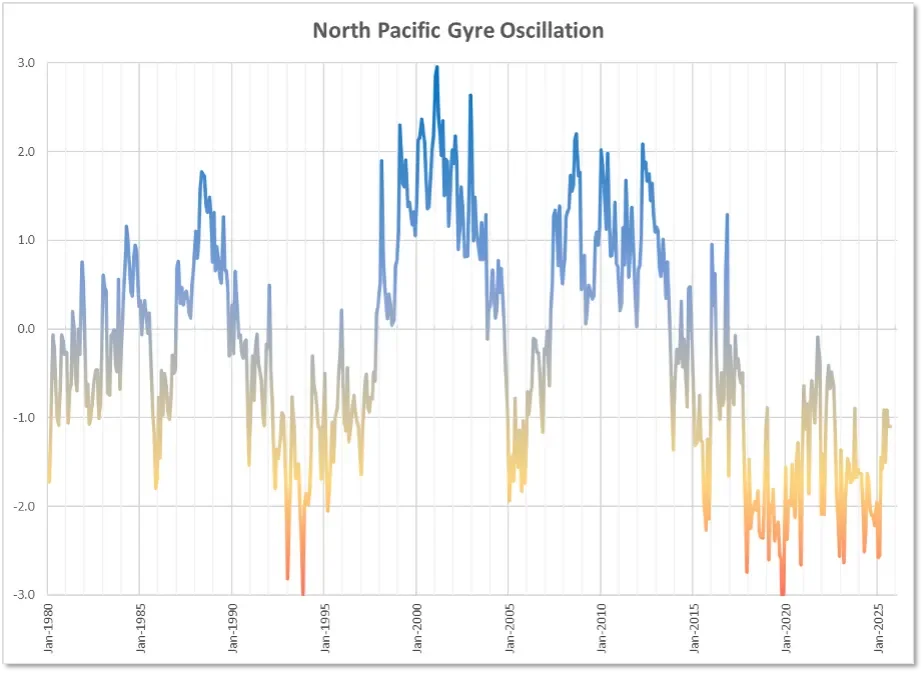
The correlation between steelhead productivity and the NPGO is clear and concerning. Ocean conditions have been consistently unfavorable since late 2013, aligning precisely with the recent collapse in steelhead returns across the Pacific Northwest.
Greenhouse gas emissions are the underlying driver. As atmospheric carbon traps more heat, the ocean’s surface layer warms, reducing vertical mixing with colder deep water. This creates a thinner mixed layer where heat becomes concentrated, accelerating surface warming in a self-reinforcing cycle.
But the North Pacific isn’t just warming, it’s warming faster than any other ocean basin on Earth since 2013.
The region has experienced two major marine heat waves in just five years, with devastating consequences for marine mammals, seabirds, fisheries, and the coastal communities that depend on them. These events aren’t anomalies; they’re warnings.
What the future holds for wild steelhead and the broader North Pacific ecosystem remains uncertain. But recent data from “the Blob,” a massive patch of anomalously warm water that formed in the northeastern Pacific, offers troubling insights into what might become the new normal.
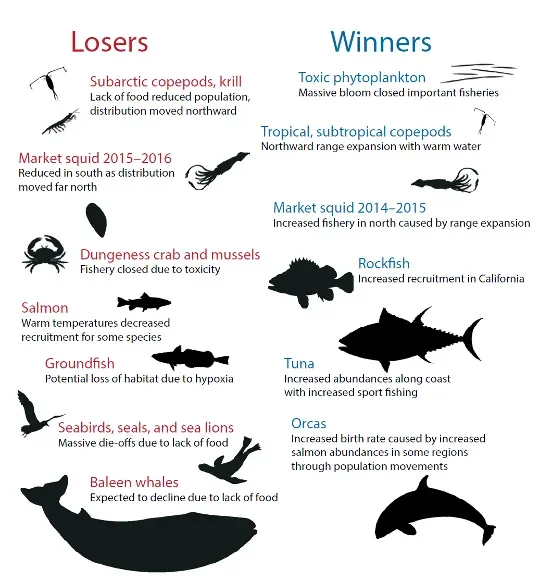
The consequences of recent warming have been far-reaching and severe. As global ocean temperatures continue to rise, these changes may signal fundamental ecological shifts already underway, shifts that wild steelhead, already pushed to the edge by a century of habitat loss and overharvest, may not survive.