
Wild Steelhead Deserve Better Than Senate Bill 6241
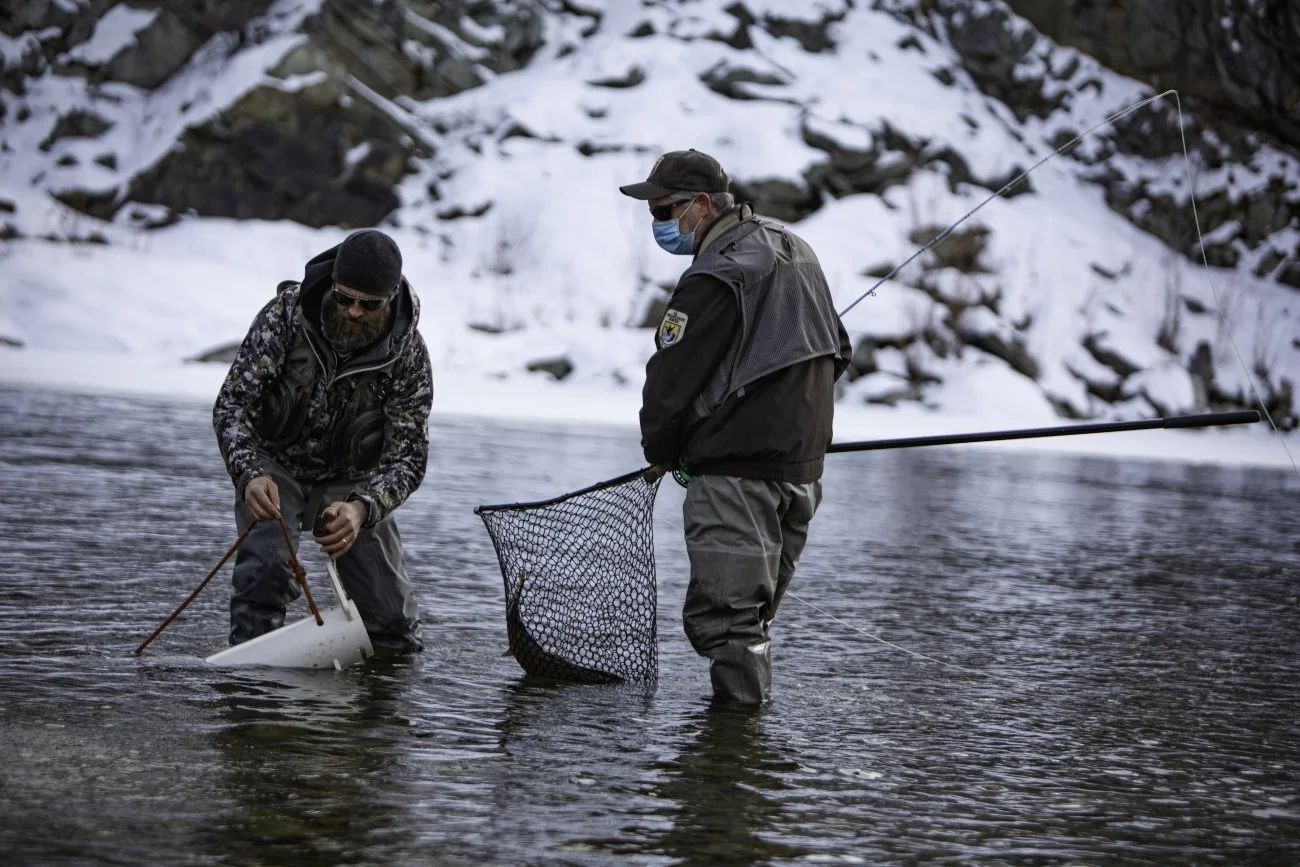
Photo: Brandon Pasley/USFWS
Washington state legislators are considering Senate Bill 6241, a well-intentioned but misguided attempt to save struggling steelhead populations. The bill, introduced by Senators Braun, Boehnke, Dozier, Hasegawa, Wagoner, and Wellman, would direct the Washington Department of Fish and Wildlife to establish wild steelhead broodstock conservation programs statewide. The underlying assumption is simple: if hatchery programs are failing with out-of-basin broodstock, why not use local wild fish instead?
The answer, unfortunately, is equally simple: because it won't work, and it will likely make things worse.
The Volunteer Problem
Among the bill's many concerning provisions is its reliance on volunteer anglers to deliver live broodstock to hatcheries. This might sound like civic engagement, but research from Oregon's Alsea River tells a different story. Scientists documented "a negative effect generated through broodstock collection by anglers, which reduced the production of adult hatchery steelhead." If we must collect wild broodstock at all, fish trapping produces far less stressful collection than angler-based methods. But the real question is whether we should be doing this at all.
The bill itself acknowledges the problem: current hatchery programs are failing. They rely on lackluster performing, often out-of-basin broodstock that have neither reversed dwindling populations nor adequately provided mitigation and fishing opportunities, all while costs continue climbing. But the solution to failed hatchery programs isn't to double down by pressuring already struggling wild populations. It's to recognize that hatcheries cannot substitute for healthy ecosystems and naturally reproducing fish.
The Biology Doesn't Lie
Here's what decades of research has taught us: hatcheries fundamentally change fish, even when you start with wild broodstock. In the controlled environment of a hatchery, selection pressures shift. Broodstock rarely exhibit natural mate choice. Juvenile survival is artificially high. Fish with traits that would doom them in the wild can thrive in concrete raceways, passing on genes ill-suited for rivers and oceans.
The changes go deeper than genetics. Emerging research on epigenetics shows that the hatchery environment literally changes how genes are expressed, turning certain genes on or off without altering the DNA itself. These epigenetic changes stem from developmental plasticity and help explain why hatchery fish, even those from wild parents, consistently show reduced fitness compared to their wild counterparts.
Capacity Matters
Every watershed has limits, a carrying capacity beyond which adding more fish simply increases competition without boosting overall populations. Stock-recruit analyses measure these limits and should be standard practice before launching any wild broodstock program. If a system is already at or near capacity, pumping in 50,000 hatchery smolts annually won't increase adult returns. It will just create more mouths competing for the same limited resources.
The Oregon Mirage
Proponents point to Oregon, where the bill notes "steelhead fisheries are stabilizing and ocean returns are increasing in part due to wild broodstock conservation programs." That qualifier, "in part," deserves scrutiny. Steelhead numbers are influenced by multiple environmental factors: ocean conditions, pink salmon competition, habitat quality, harvest rates. Crediting Oregon's improvements primarily to wild broodstock programs, without rigorous analysis of these other variables, is wishful thinking masquerading as science.
And speaking of ocean conditions, consider the timing. With projected warming and high pink salmon abundances, steelhead face increasingly challenging marine survival. This is precisely not the time to intentionally produce less fit fish. The wild steelhead returning to our rivers today are proven survivors. They've made it through gauntlets that killed their peers. Their genetics represent our best hope for climate resilience. Why would we divert these superior fish from natural reproduction to produce hatchery progeny with reduced fitness?
A Pilot Program Already Exists
Here's the irony: we don't need this statewide mandate because we already have a pilot program in the works. A SEPA review is underway for proposed use of wild steelhead as broodstock on the Quillayute System. The proposal calls for collecting 40 natural-origin broodstock by hook-and-line or netting in the Quillayute River basin between January and mid-February. Fish would be genetically screened to ensure minimal Chambers Creek ancestry, held at Bogachiel Hatchery until mature, then spawned and released. Up to 50,000 one-year-old smolts would be released annually, all adipose-clipped and coded-wire tagged to track returns.
This is exactly the kind of careful, monitored approach that might actually teach us something. Let this pilot proceed. Evaluate the data on return rates, fitness impacts, carrying capacity effects, and population outcomes. Then, and only then, consider whether expansion makes sense. Mandating a statewide program before we have any evidence of utility isn't conservation, it's bureaucratic momentum.
What We Should Do Instead
Real steelhead recovery requires addressing root causes, not biological band-aids. We need habitat restoration, thoughtful harvest management, and honest reckoning with the environmental factors driving declines. We need to let proven wild survivors continue their time-tested reproductive strategy, especially given emerging climate challenges.
The practice of diverting struggling wild steelhead populations to produce hatchery fish is biologically counterproductive. These fish have survived increasingly difficult conditions. They represent our best genetic material for future resilience. They should be spawning naturally, not serving as broodstock for a program built on hope rather than evidence.
Senate Bill 6241 may be well-intentioned, but good intentions don't change biology. Before Washington commits millions of dollars and thousands of wild fish to an untested statewide program, let's do the science. Let's evaluate the Quillayute pilot. Let's see if this approach works.
Wild steelhead deserve better than guesswork. They deserve science, patience, and the chance to do what they've done successfully for millennia: survive.